
Raid the Vault
Compounding Impact > Compounding Interest

When was the last time you looked at your endowment’s 10-year return and thought, “That’s the problem”?
Probably never. Because for most of us who interface with foundation finance, a strong return is seen as the solution—the engine that lets us give more, later. But what if that logic is exactly backwards?
Let me introduce you to a different metric: compounded impact. What becomes possible if we flip the equation entirely? If giving more now creates a return that no market can match—because the organizations we fund grow their capacity today, and that capacity compounds into tomorrow.

I’ve spent years inside this tension. At Stupski Foundation, we’ve tested what happens when you move substantially beyond the standard 5 percent payout into a full spend-out model. Our increased giving meant that organizations we backed didn’t just survive, but grew. Their impact deepened. And that deepening continues to multiply.
So why isn’t every foundation doing this?
The Problem: We Think We Get It. We Don’t.
The Center for Effective Philanthropy’s State of Nonprofits 2026 report has been downloaded thousands of times. And the headline finding should keep every foundation board up at night.
Nearly 90 percent of funders believe they understand what their grantees are experiencing. Only 40 percent of grantees agree.
That gap didn’t exist in 2014. It’s new. And it’s widening.
CEP’s Elisha Smith Arrillaga, vice president of research, has been inside the boardrooms where this data lands. And she’s noticed something troubling: When she presents the rising deficits, the nonprofit leader burnout, the fact that nonprofits are discussing mergers just to stay alive, the first response from some trustees is, “Well, aren’t there too many nonprofits anyway? Survival of the fittest?”
That’s the wrong question, Elisha told me in a recent Break Fake Rules interview. The question isn’t efficiency, but whether people get fed or receive life-saving services.
“Given that there are five domestic violence organizations all doing the same thing,” she said, “I don’t think that’s too many of them. Not even before the cuts.”
No, It’s Not Hard to Move Money. But Some of Us Just Won’t Do It.
Here’s what makes this moment different from past crises. In a recession or a pandemic, foundation endowments were hurting too. Markets were down, and for many, payouts declined.
But today, many foundation endowments are up. While the communities we serve are under siege—from ICE enforcement, from frozen federal grants, from a repressive federal political agenda—our balance sheets have never been healthier.
And yet, as Elisha put it, “What we’re seeing from many funders is that they are not necessarily responding as if it is a very different moment.”
Sure, you’ll see statements and hear reports from some foundation leaders that they’re experimenting with trust-based giving. Others are reducing grantee reporting burdens. A few are increasing general operating support.
All of that is good. But none of it is enough.
Because what the data is screaming—and what too many in our sector are politely ignoring—is that the communities that nonprofits serve need money. Not more permission slips or fewer reporting questions. We’re talking raiding the vaults and handing over the cash. Now.
Some foundations have figured this out. The ones increasing payout dramatically. The ones adopting spend-down models. The ones who understand that nonprofits have absorptive capacity—they can use the money, effectively, immediately, without a 12-month ramp-up or planning process.
If the excuse is “we need a strategy,” Elisha has a response for that too. When I asked her for the one fake rule she wants the philanthropic sector to break, she didn’t hesitate:
“The most important fake rule to break is that we need a strategy to solve every problem. There is a solution right now that requires making sure those organizations have the resources they need. There’s always something we can do right now that doesn’t necessarily require a plan—but requires action.”
A New View: Compounded Impact
When it comes to investing, our sector is exceedingly well-versed in compounded interest. It’s the logic of the perpetual endowment: Grow the principal, give a minimal payout each year, and the foundation lives forever.
But what if we prioritized compounded impact instead?
At Stupski, we’ve seen what happens when you give substantially beyond what a 5 percent payout would allow. Organizations grow their capacity now, and that capacity doesn’t disappear. It compounds. Their next campaign is stronger. Their next hire is better. Their next policy win uplifts more people.
What’s better? For foundations to grow our interest in real estate speculation—or for the communities we serve to grow their impact?
I’ll choose compounded impact every time.
A Heads Up from My New Pal Ray Madoff
At the TIME100 dinner last week, celebrating this year’s most influential figures in philanthropy, I met Ray Madoff, author of The Second Estate: How the Tax Code Made an American Aristocracy. She’s a professor at Boston College Law School, and TIME named her to the list for her relentless critique of how the tax code protects wealthy donors—including philanthropists.
Her warning is simple, and it should be a wake-up call for anyone who cares about our sector’s legitimacy.
The wealthy avoid taxes through a three-step playbook: Avoid salaries, hold assets without selling them, and borrow against those assets for tax-free cash. And here’s the kicker—philanthropy’s tax benefits are structured the same way. Donors get an immediate deduction for putting money into donor-advised funds, with no timeline for ever spending it down.
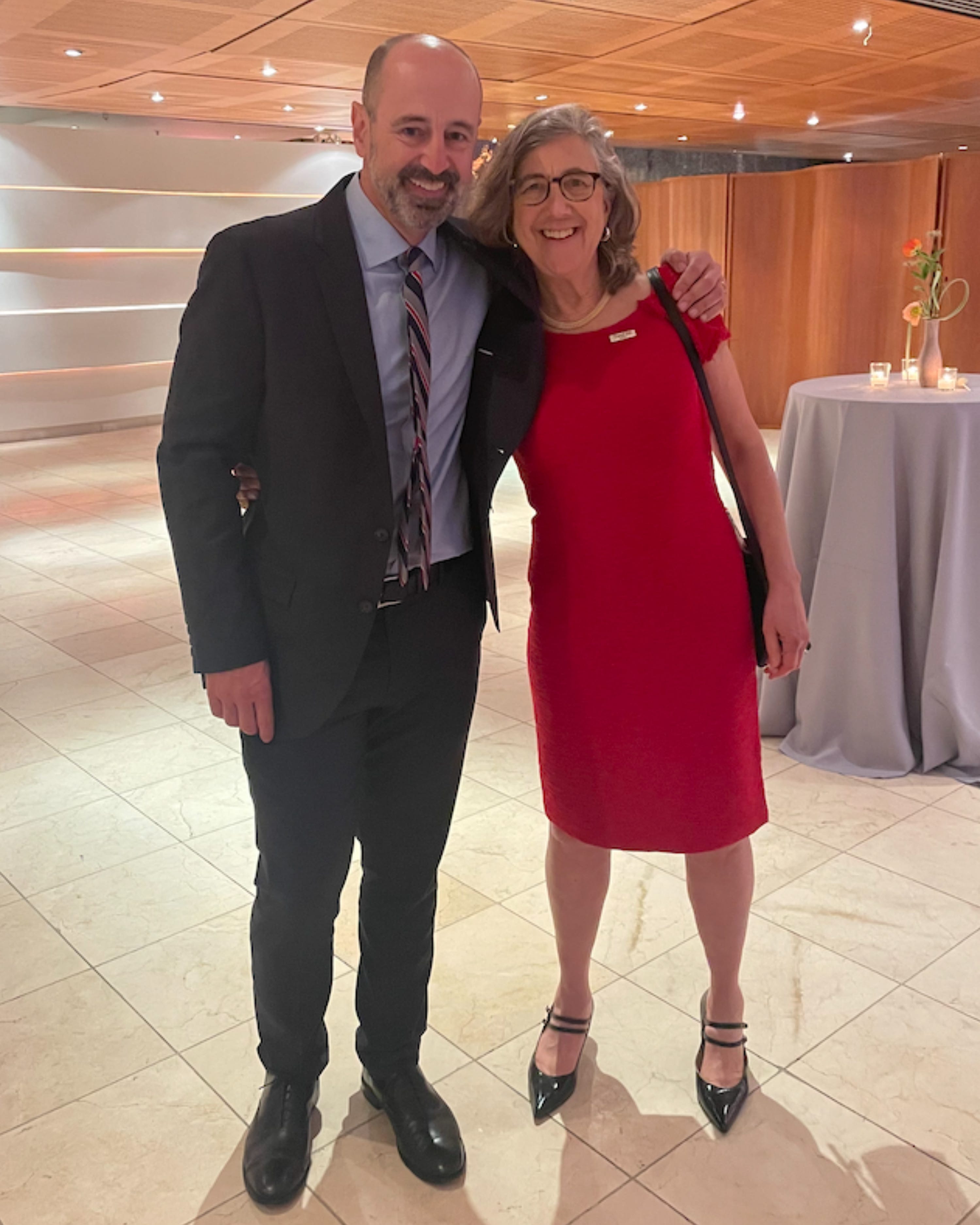
To put it plainly, “the wealthy have been able to write themselves out of the tax system altogether,” Madoff told Inequality.org. “I think that our first step in tax policy is bringing the wealthiest Americans into our tax system. Our total government revenue in 2024 was $5 trillion, and we had a deficit of about 2 trillion because we spent almost $7 trillion. And then you realize that the wealthiest 1 percent owned $50 trillion, it matters whether this group pays taxes. It matters because our growing debt is a problem.”
Her research on the French Revolution carries an uncomfortable lesson for our sector: When aristocrats hoard wealth while the rest of society suffers, the social contract breaks. And history does not look kindly on the hoarders.
I’m not predicting revolution. But I am saying that the gap between foundation wealth and community need has never been wider. And pretending that a 5 percent payout is sufficient—while nonprofits shutter and masses of folks are forced out of their homes and stripped of food benefits—is not a sustainability strategy.
An Invitation
TIME gave me a tagline for my own addition to their 2026 most influential in philanthropy recognition: “raiding the vault.” I love what that means for moving money out of foundation investments and into communities.
My invitation to peers in this sector is simple: Imagine how you, too, can help raid the vault and give more NOW.
The best way you could help me celebrate this honor is to help me ask our sector a single question:
What’s better—compounded interest or compounded impact?
The communities we serve have already answered. It’s time our balance sheets caught up.
—G.
Updates from the CONTROL Book Tour
I may be headed to a city near you as I continue the CONTROL book tour. You can find the latest tour dates and locations here.
Thanks again to all those who have left a review of the book here, or at your favorite bookseller!
For more on compounding impact, see my recent interview with Sarah Lomelin for Philanthropy Together (a clip from the longer version is below).
More on Substack and Beyond
Jordan Zakarin reports on a new poll from More Perfect Union and Blue Rose Research, which reveals that President Trump's executive orders requiring documentary proof of citizenship to register to vote—including an up-to-date passport—would create significant financial barriers for working- and middle-class Americans. “Poll: Trump’s Election Orders Would Mass Disenfranchise Working-Class Voters” reveals that nearly half of lower-income voters say the $130 fee for a new passport would prevent or deter them from voting altogether. Only 26 percent of all voters reported they have an up-to-date passport, suggesting the restrictions would effectively mass disenfranchise the voters Trump claims to represent.
In a systematic assault that historian Ellen Schrecker has deemed more severe than McCarthyism, the current federal administration has deliberately targeted universities—freezing billions in research funding, cutting the National Science Foundation budget, launching scores of investigations into DEI programs, and pressuring institutions to sign loyalty agreements dictating admissions, curriculum, and campus speech. “The University Is a Target,” writes Scot Nakagawa of The Anti-Authoritarian Playbook, because universities produce independent knowledge, train critical thinkers, and house dissenting voices, all of which authoritarianism must dismantle to consolidate power. The hope, Nakagawa reminds us, is that campus labor—faculty, graduate workers, and staff unions—possesses distinctive power to resist, with research showing that without organized labor, reversing authoritarian consolidation is a coin toss, but with labor, it is a near certainty.
Scott Galloway and Ed Elson sit down with Ray Madoff on Prof G Media to break down how America’s wealthiest avoid taxes—legally. They dig into the biggest loophole the ultrawealthy use to their advantage and discuss what it would actually take to fix a system that was designed to fail everyone but the billionaires.
A huge Ray Madoff fan here. If the Prof G interview leaves you wanting more, she has a great conversation with Ezra Klein, too: https://www.nytimes.com/2026/04/17/opinion/ezra-klein-podcast-ray-madoff.html
Glad to see you highlight the rising tide of "nonprofits should merge" talk from foundation boardrooms. Smith Arrillaga is spot on. That perspective can come only from those sitting at a remove from the community served and the groups doing the work. Clients of all of those nonprofits could tell you all the reasons why they rely on A group vs B group, even if from the boardroom they appear to do the "same thing."
I have absolutely no patience for this kind of "solution" coming from people who actively engage in manufactured scarcity with a commitment to the 5% payout as their ceiling.
Thanks so much Glen!
It was great meeting you and I am a huge fan of your work getting more money out of foundations. Looking forward to joining forces with you toward this important goal!